
Environmental Ship Index (ESI) for Ports
Incentivise environmental performance using a globally established, industry-led framework
ESI provides ports with a consistent, industry-led framework to design and apply incentive schemes that reward ships performing beyond regulatory requirements.
What is the Environmental Ship Index (ESI)?
The Environmental Ship Index (ESI) is a globally established, industry-led port incentive scheme that enables ports to recognise and incentivise ships performing beyond international environmental regulations.
Established in 2011 and owned and developed by the International Association of Ports and Harbors (IAPH), ESI is recognised by the International Maritime Organization (IMO) and is today offered by more than 100 ports worldwide.
How ESI Works in Practice
ESI provides the reference framework. Each port retains full control over its incentive design.
1- Ships register once with ESI
Ships provide comprehensive data on emissions to air to ESI.
2- ESI scores are calculated centrally
The ESI administrator verifies the data, computes the relevant ESI scores, and provides the scores to all participating ports on a quarterly basis.
3- Ports apply incentives using ESI scores
Ports define their individual ESI incentive schemes and apply them to vessels calling at the port based on the ESI scores provided.
Why Ports Participate in ESI
Be the port of call for clean vessels. Support clean air initiatives by incentivising vessels with higher environmental performance.
Industry-led and non-commercial governance
- Developed by the International Association of Ports and Harbors (IAPH) and recognised by the International Maritime Organization (IMO)
Participation helps attract increased vessel traffic
by continuous visibility to the +7,200 participating vessels - especially those with low emissions to air.
Enhanced visibility of clean air initiatives
towards port stakeholders through targeted schemes, individually designed by each port.
Low implementation effort
as data collection, scoring, and scheme calculation are centrally provided by the ESI administrator
Your port – Your Incentive Scheme
ESI provides a consistent and independent framework, while incentive levels and application remain fully defined by each participating port.
Supports your clean air initiatives
Incentive levels and application remain fully defined by each participating port
Applicable to ports of any size and any type of terminal
Communicate Your Environmental Engagement
Participating ports receive official certificates, digital badges, and communication materials to demonstrate participation in ESI and highlight their clean air initiatives toward stakeholders.
Flexibility by Design: No Prescriptive Incentive Structure
- Recognised by the IMO as a standard basis for port incentives
- Covers CO2, SOx, NOx emissions, with additional modules evolving
- Incentivizes vessels that perform above regulatory standards
- IAPH member ports do not pay a participation fee
Minimal Effort for Ports: Data Collection, Verification and Score Computation by OceanScore
OceanScore supports the administration and technical operation of ESI, ensuring consistency, transparency, and reliable data handling in coordination with IAPH and ESI governing bodies.
Scheme operation & support
Data handling & validation
Continuous technical development
OceanScore works in close coordination with IAPH, the ESI Board, and the ESI Technical Advisory Group to ensure continuity, transparency, and consistent application of the ESI framework.
Backed by IAPH & Recognized by IMO
The Environmental Ship Index (ESI) is owned and developed by the International Association of Ports and Harbors (IAPH) and recognized by the International Maritime Organisation (IMO). It is offered by more than 100 ports worldwide with over 7,200 vessels currently registered.
100+ ports and maritime administrations
7,200+ vessels registered
Leading scheme of its kind globally
Participating Ports
Seagoing ships with an ESI score between 20 and 40 will be granted a discount of 5% on their port dues. Scores of 40 to 60 receive a 10% discount. Scores of 60 to 80 receive 15%. Scores of 80 and above receive 20% discount.
No ports match your search.
Explore Our Other Port Solutions
PortView
PortView provides ports with a defensible emissions baseline and a continuous measurement framework to track progress toward decarbonization goals.
Learn MoreFAQs
The Environmental Ship Index (ESI) is a voluntary, industry-led environmental performance scheme that enables ports to incentivise ships demonstrating environmental performance beyond applicable regulatory requirements. It is owned and developed by the International Association of Ports and Harbors (IAPH) and administered globally by OceanScore.
Ports participate in ESI to:
Demonstrate sustainability engagement through a globally recognised framework
Incentivise ships that perform beyond regulatory requirements
Apply financial incentives such as port fee reductions based on independently assessed environmental performance
Support sustainability objectives beyond their direct Scope 1 and Scope 2 emissions
ESI provides a consistent and independent reference framework that ports can use to design and apply their own incentive schemes.
Each participating port retains full autonomy to define:
- Which incentives to offer
- Eligibility thresholds
- How ESI scores are applied locally
ESI does not prescribe incentive levels or structures.
Incentives offered through ESI are voluntary and port-specific. They typically include:
- Financial incentives such as port fee reductions
- Other locally defined benefits linked to environmental performance
Each port decides which incentives to offer and under which conditions. The financial incentive will need to be approved by IAPH.
Yes. ESI is designed to be flexible and scalable, making it applicable to ports of different sizes, traffic profiles, and development stages.
Ports can implement ESI-based incentives without the need for complex local systems.
ESI identifies ships that perform beyond mandatory IMO requirements using verified emissions-related data.
The scheme currently covers CO2, SOx, NOx and shore power usage, evolving over time in line with technical and regulatory developments.
ESI is offered by more than 100 ports and maritime administrations worldwide, with over 7,200 vessels registered, making it the most widely adopted environmental incentive framework in global shipping.
Yes. ESI is:
- Owned and developed by IAPH
- Integrated into IAPH’s governance structure
- Recognised by the International Maritime Organization (IMO) as a standard basis for port incentives for low- and zero-carbon ships
Ports that are members of IAPH do not pay a participation fee to take part in ESI.
The application of incentives remains entirely at the discretion of each port.
Implementation is straightforward.
ESI does not require ports to build or maintain their own scoring systems. Scheme operation, data handling, and technical administration are managed centrally by the ESI administrator.
Under agreement with IAPH, OceanScore acts as the globally mandated administrator of the Environmental Ship Index. OceanScore manages all the data collection, verification and score computation, making it easy for ports to offer ESI incentives.
OceanScore supports:
- Scheme operation and technical administration
- Data handling and validation
- Ongoing user support
- Continuous development in coordination with IAPH and ESI governing bodies
OceanScore does not define port incentives and does not own the scheme.
No. ESI does not replace regulatory compliance.
It complements regulation by incentivising environmental performance beyond mandatory requirements, allowing ports to reward ships that go further than the regulatory baseline.
Official information about ESI and access to the scheme is available at
www.environmentalshipindex.org
Ports interested in discussing ESI implementation can also contact OceanScore as the scheme administrator.
ESI Core is the updated methodology of the Environmental Ship Index (ESI), entering into force on 1 January 2027.
The updated framework modernizes how vessel environmental performance is assessed and aligns the scheme more closely with today’s shipping realities and environmental regulation.
ESI Core strengthens incentives for measures that actively contribute to lower emissions, including:
• cleaner fuels
• shore power usage
• wind-assisted propulsion
• air lubrication
• batteries and environmental innovation
The framework also introduces a stronger focus on operational and performance-based environmental assessment.
Many ports may need to reduce qualification thresholds by approximately 10–15 points to maintain similar levels of vessel coverage under the updated methodology.
ESI Core improves transparency and reporting capabilities for ports.
Enhanced quarterly insights powered by OceanScore data support visibility into:
• vessel activity
• sustainability trends
• shore power usage
• future infrastructure needs
• alternative fuel developments
Ports are encouraged to review current thresholds and assess the impact of the updated methodology before ESI Core enters into force on 1 January 2027.
Interested in offering ESI-based incentives at your port?
Talk to OceanScore, the globally mandated administrator of the Environmental Ship Index.
Let's TalkLearn More About the Environmental Ship Index
Explore our guides to understand how the Environmental Ship Index works and how ships and ports benefit from it.

ESI Core: What Shipping Companies Need to Know About the Environmental Ship Index Update
ESI Core modernizes the Environmental Ship Index to better reflect today’s shipping realities while making participation simpler and more practical…
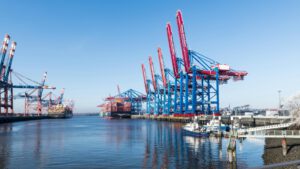
ESI Core: What Ports Need to Know About the Environmental Ship Index Update
ESI Core enters into force in 2027 and introduces the most ambitious evolution of the Environmental Ship Index so far.…
Environmental Ship Index (ESI): The Complete Guide for Shipping Companies and Ports
The Environmental Ship Index (ESI) is the world’s leading port incentive scheme, rewarding ships performing beyond emission standards with port…

